http://www.youtube.com/watch?v=5Jm9EUvwFj4
OMG is this not Beatrice and Benedick exactly?? And quite hilarious (:
I guess I don't know how to copy the video but you should definitely copy and paste it. It's way worth it!
Wednesday, December 4, 2013

Monday, October 21, 2013
King Arthur and the Fairly Odd Parents
My obvious example is the 2004 movie King Arthur, which was supposed to be a more realistic take on his life. It depicts Arthur as a roman soldier rather than a king or knight.


My abstract analogue is in the Fairly Odd Parents episode "Knighty Knight". Timmy wishes he was back in Camelot after attending a disappointing Camelot fair, but when he arrives his parents are taken hostage by a dragon. Timmy pulls Excalibur out of the stone to save his parents and is pronounced king, ruining the chances for Arthur, a little boy with poor eyesight and his Uncle Merlin, a greedy wizard who wants Arthur to become king so they can be rich. Upon saving his parents, Timmy gives Arthur glasses to improve his vision and Arthur, with sword in hand, defeats the dragon and becomes the great King Arthur he is destined to be
Arthur and his Uncle Merlin

Arthur getting glasses.
First Knight and Harry Potter
"First Knight" is a 1995 film based off of the Arthurian legend with Richard Gere as Lancelot and Sean Connery as King Arthur. It tells the typical tale of King Arthur, though it neglects the use of magic or the supernatural.

A less obvious analogue comes from "Harry Potter and the Chamber of Secrets." I am making the relationships between Dumbledore and Merlin, and between Harry and King Arthur. There are three comparisons to make. Merlin was King Arthur's mentor and adviser. Dumbledore is essential to guide Harry through the dangers and obstacles that present themselves. To protect Arthur, Merlin took him to a lake and gave him Excalibur. Dumbledore does a similar thing in this particular movie when he gives Harry the sword of Gryffindor (the Sorting Hat) when Harry faced the serpent monster. Lastly, Arthur pulled a sword from a stone which proved his worth and his nobility. This test proved he was the "true king." Harry pulled the sword from the Sorting Hat which proved his worth that he was a "true Gryffindor." In "The Deathly Hallows," Harry gets the sword from a lake even though his locket attempts to drown him.

A less obvious analogue comes from "Harry Potter and the Chamber of Secrets." I am making the relationships between Dumbledore and Merlin, and between Harry and King Arthur. There are three comparisons to make. Merlin was King Arthur's mentor and adviser. Dumbledore is essential to guide Harry through the dangers and obstacles that present themselves. To protect Arthur, Merlin took him to a lake and gave him Excalibur. Dumbledore does a similar thing in this particular movie when he gives Harry the sword of Gryffindor (the Sorting Hat) when Harry faced the serpent monster. Lastly, Arthur pulled a sword from a stone which proved his worth and his nobility. This test proved he was the "true king." Harry pulled the sword from the Sorting Hat which proved his worth that he was a "true Gryffindor." In "The Deathly Hallows," Harry gets the sword from a lake even though his locket attempts to drown him.
Saturday, October 19, 2013
The Magic Treehouse series and The Great Gatsby
As far as Arthurian legend goes, there are a lot of really obvious replications, but in lieu of not repeating what's already been said, I was thinking and remembered that the series The Magic Treehouse series had some rather obvious allusions to the Arthur tales.
The most commonly mentioned was a woman who owned the treehouse, who was named Morgan Le Fay, the name of a character in Arthurian legend- I believe she's a witch. She was always a very mysterious character, and you never found out too much about her; one thing that we did learn, however, was that she resided in the realm of Camelot (Coincidence? I think not.). I don't honestly remember much more about her- though she did actually send the kids (Jack and Annie? I think that's their names) to Camelot in a superbly epic Christmas adventure.
I don't remember whether she was good, bad, or ambiguous in the stories, but I was always quite intrigued by her. Just a side-note on this series: how interesting is it that it was teaching kids history while meanwhile being heavily based in mythological characters?
Okay, now for the more vague one. I wish I could claim this one as my own idea, but alas I cannot. I heard someone mention it once and just sort of expanded on it. There are some allusions to King Arthur in the Great Gatsby.
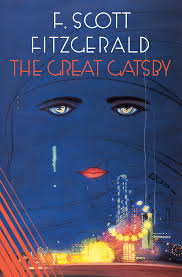
To a certain extent, one can see the relationship between Gatsby, Daisy, and Daisy's husband Tom as a reflection of Lancelot, Guinevere, and King Arthur. Just as Lancelot's one weakness was Guinevere, so Gatsby's one weakness was Daisy. And, accordingly, the actual husband in each story was veritably ticked off. In a separate parallel to Arthur, at one point in The Great Gatsby it says, "...he had committed himself to the following of a grail." Daisy was Gatsby's holy Grail, the thing that he searched after and fought for for years. She was, as the grail was for many knights, his one pursuit in life.
 |
| These were awesome. |
 |
| SO wanted a white stag to ride after I first saw this cover. And a red cape, for that matter. |
Okay, now for the more vague one. I wish I could claim this one as my own idea, but alas I cannot. I heard someone mention it once and just sort of expanded on it. There are some allusions to King Arthur in the Great Gatsby.
Friday, October 18, 2013
Quest for Camelot & Shrek
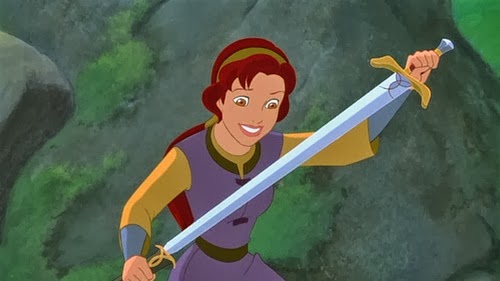
My obvious reference is the movie Quest for Camelot. The main character Kayley wants to be a knight of the round table, like her late father. In the movie, a character modeled after the Arthurian Red Knight steals Arthur's sword Excalibur and reeks havoc. Kayley goes on a journey with a blind man Garrett (partially modeled after the knight-in-disguise Gareth from Arthurian legend) to find the sword and return it to Arthur.

=

My more obscure reference is the DreamWorks film Shrek because, like Arthur, Shrek goes on a quest (Arthur for the Holy Grail and Shrek for Princess Fiona) to restore life as they know it. In one of the Grail legends, Arthur seeks the cup in order to end an illness that has gripped his kingdom, and Shrek seeks Fiona for Lord Farquaad, so all the fairy tale characters will leave his home and he can live in peace.
Thursday, October 17, 2013
King Arthur's Merlin
To be obvious, I always think of the show "Camelot". It was a Starz show that only lasted for one season. I never watched it, but I know that it was to be based off of Arthurian legends and stories.

When I think of a more obscure example, I think of Harry Potter. I don't think of the entire series, but only a small scene in Harry Potter and the Half-Blood Prince. In order to defeat Voldemort, all of the Horcurxes(objects that have pieces of Voldemort's soul in them) have to be destroyed. Only then can Voldemort be defeated. Professor Dumbledore and Harry go to a destroy one-a necklace. In order to destroy it, they have to get it out of this container full of liquid. The liquid has to be drank, and drives you crazy in the process. It inhibits you from being able to reach the Horcrux. In the scene, Dumbledore is the one who has to drink the liquid, even when Harry has to force him. Only then can Harry obtain the Horcrux from the container. This particular scene reminds of the sword in the stone tale, even if Harry(Arthur) had to have help from Dumbledore(Merlin).
http://www.youtube.com/watch?v=0nVQPwH2m4s
When I think of a more obscure example, I think of Harry Potter. I don't think of the entire series, but only a small scene in Harry Potter and the Half-Blood Prince. In order to defeat Voldemort, all of the Horcurxes(objects that have pieces of Voldemort's soul in them) have to be destroyed. Only then can Voldemort be defeated. Professor Dumbledore and Harry go to a destroy one-a necklace. In order to destroy it, they have to get it out of this container full of liquid. The liquid has to be drank, and drives you crazy in the process. It inhibits you from being able to reach the Horcrux. In the scene, Dumbledore is the one who has to drink the liquid, even when Harry has to force him. Only then can Harry obtain the Horcrux from the container. This particular scene reminds of the sword in the stone tale, even if Harry(Arthur) had to have help from Dumbledore(Merlin).
http://www.youtube.com/watch?v=0nVQPwH2m4s
Tuesday, October 15, 2013
Two for One!
Since I missed last week, let's do two examples of King Arthur sources and analogues, one obvious and the other as obscure and abstract as you can make it.
So .....

James Callis in the Syfy Original Merlin and the Book of Beasts with a Jamaican accent.


Since I missed last week, let's do two examples of King Arthur sources and analogues, one obvious and the other as obscure and abstract as you can make it.
So .....
James Callis in the Syfy Original Merlin and the Book of Beasts with a Jamaican accent.
Dean trying to pull a sword out of a stone on Supernatural

Doctor Who as Merlin
Jay Z's "The Magna Carta Holy Grail"
Monday, October 14, 2013
Breakfast at TIffany's (Oct. 2)
This may be a stretch, but when I tried to think of a story just like "Wife of Bath" I couldn't help but think of the character Holly from "Breakfast at Tiffany's." Holly, just like the wife, is outspoken and bold, unlike most women of their times. They both have fancy clothing and flaunt this lifestyle. The two women have not had the best track record for relationships, as the Wife of Bath has been married several times and her husbands have all died...Holly has made it clear she wants money. Both women being independent, they both actually hold a level of intelligence in that they can talk about what they mean and what they want. The two women certainly like to chat. These women draw the reader/viewer to want to like them very much so and for these reasons the two pieces of literature resemble another.

When in Rome (Oct. 28)
When I thought about this idea of men fighting over the same girl, I immediately thought of the movie "When in Rome," when a woman wishes for love by throwing a coin in a fountain in Italy. However, she is under a sort of spell and every man that sees her pretty much falls in love with her from first sight. They definitely display courtly love, as all they really want to do for her is to impress her and make her "pick" them, with the exception of one guy who truly loves her, not under a spell. This movie represents elements of both "The Knight's Tale" and also this idea of courtly love from this time period. "When in Rome" is a prime example!

Wednesday, October 9, 2013
My Best Friend's Girl (Oct 2)
It's not the exact story, but My Best Friend's Girl has some similarities to the Knight's Tale. In case you haven't seen the movie, two cousins share an apartment, and Tank runs a "bad date" service. He goes out with guys' ex girlfriends and makes it such a bad experience they go begging to get back with the ex. After his cousin is rejected by a coworker, Tank agrees to help him out by going on a bad date with her. However, she gets too drunk to notice that he's a terrible date, and through a series of events they both end up falling for her. Obviously the movie takes a few liberties, but it's the closest thing I could think of since someone already took This Is War. :)
A Knight's Tale (Sep 28)
Now I know it's a stretch, but I'm going to go out on a limb and say that A Knight's Tale was inspired by Chaucer's Canterbury Tales. Common characters include Chaucer, Simon the Summoner, and Peter the Pardoner. The idea of courtly love also seems to be present in this story, which I hadn't really realized in my original viewings of the movie. I also love how at the end of the movie Chaucer remarks to himself that he should really write all this down. The more you know, the more clever the movie becomes!
Tuesday, October 8, 2013
Harry Potter and The Illiad (for Sept. 28 prompt)
J.K. Rowling has been cited as saying that she drew from Hector's, Achille's, and Patroclus' actions in The Illiad while writing the scene in which Harry Potter saves Cedric Digory's body. Rowling said that she was "really, really, really moved" when she read The Illiad at age 19 and that "the idea of the desecration of a body, a very ancient idea" was her focus when writing the scene.
Saturday, October 5, 2013
Courtly Love in Enchanted
One of the things that is a theme in several of the Canterbury tales is "courtly love." This is an image that isn't at all uncommon in modern stories, in books and in movies. One example that I thought fit rather well- though, it was drawn off of other fairy tales rather than Chaucer- is the Disney movie Enchanted. Various aspects of courtly love are evident throughout the movie, and there is even the added bonus of seeing exactly how silly the classic version of it looks in modern times.
First there is the relationship between Edward and Giselle. He spends all his time saying how much he loves her, what he loves about her, and he says things like, "This is Giselle, the love of my life, my heart's true desire." It's adorable and very sweet, but when it comes down to it, there really isn't any substance to their relationship. In addition, Edward is always doing daring deeds, and in the beginning was pining after a dream of "true love's kiss."
The part that really reminded me of courtly love, actually, was the whole "true love's kiss" thing. It's a very innocent type of love. For instance:
Admit it, though, it would be awesome if some of this (mostly the whole
breaking into song thing) worked in real life?
First there is the relationship between Edward and Giselle. He spends all his time saying how much he loves her, what he loves about her, and he says things like, "This is Giselle, the love of my life, my heart's true desire." It's adorable and very sweet, but when it comes down to it, there really isn't any substance to their relationship. In addition, Edward is always doing daring deeds, and in the beginning was pining after a dream of "true love's kiss."
The part that really reminded me of courtly love, actually, was the whole "true love's kiss" thing. It's a very innocent type of love. For instance:
She just doesn't get it.
And of course, when he tries to explain what just happened with Nancy, she's just like, "She thinks we kissed?' "Yeah... something like that."
Anyway, so Enchanted, and I guess, the various fairy tales that it draws from, are all excellent examples of courtly love, as influenced by Middle English literature.
Anyway, so Enchanted, and I guess, the various fairy tales that it draws from, are all excellent examples of courtly love, as influenced by Middle English literature.
Friday, October 4, 2013
This Means War aka The Knight's Tale (for Oct. 2nd prompt)
In "The Knight's Tale" from The Canterbury Tales, cousins Arcite and Palamon both fall in love with Emily, and their competition for her causes great strife between them, including a duel.
In This Means War, two best friends and fellow spies fall for the same woman and decide to ignore their friendship and use awesome spy techniques and explosions to battle it out for her love.
Wednesday, October 2, 2013
Tuesday, October 1, 2013
Anglo-Saxon Humor in Children's Shows
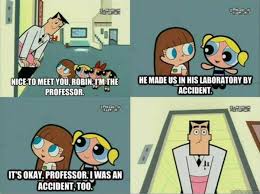
Although I enjoy Anglo-Saxon humor and its use of double entendres, it is strange to see its use in children's shows. As a child, I never understood the jokes and puns that the adults around thought were funny. I liked when physical comedy happened, but my parents enjoyed the verbal wit of the programs that we watched together. Now that I am older and watch some of my old favorite television shows, I understand the verbal wit. However, it is strange to think that these adult roles and ideas are stuck in children's shows, who don't realize it until they are old. I think this is something that the Anglo-Saxons might also find humorous.


Saturday, September 28, 2013
Anglo-Saxon Humor in Modern Television
When I think of Anglo Saxon humor, I immediately think of double entendres and the "beaver scene" from How I Met Your Mother:
(Also, it's 13 minutes before it becomes Sunday, so I'm technically not posting this late, right?????)


Thursday, September 26, 2013
Anglo-Saxon humor in Modern Film
Anglo-Saxons are known for their high violence culture and their intense fights. However dark this culture may have seemed, it did have humor. The humor of the Anglo-Saxons was often obvious and blunt humor. In the midst of a serious moment, such as a fighting scene, the main character (specifically of literature) would say a humorous and outrageous remark. This type of comedy is widely accepted today. Quentin Tarantino, American film producer, director, and screenwriter, is the mayor of this type of comedy.Quentin Tarantino is known for his films because of their heavy violence content and strongly controversial topics. No matter how heavy the subject matter of the film, an odd sense of humor always peeks through.It does more than peek however. It hits the viewer right in the face.
An example of this is from the movie Django Unchained, which is a story of a freed slave on a revenge-filled journey to find his wife, who was sold to another plantation miles away. This movie does not hold back, for there are numerous graphically violent and uncomfortable scenes. At random times throughout the movie, however, a character will make an off-the-wall statement causing a brief moment of laughter. The viewer is laughing because of the actual humor of the statement and also because of the shock. The timing is strategic, always being in places the viewer would least expect.
A particular example from this film revolves around a large group of men (KKK members) on horseback, gathering in preparation of a raid. They have passed out bags to put on their heads, with handcut holes for the eyes to see. However, the bags are very poorly made. The men begin arguing about the bags in a petty way and forget the reason for their meeting. Though nothing is humorous about this slavery, violence, or racism, the scene lightens the mood for a brief moment and the viewer inevitably laughs.
Quentin Tarantino is a master of this "rough" comedy. It is present in nearly all of his major films, such as Inglorious Bastards.

An example of this is from the movie Django Unchained, which is a story of a freed slave on a revenge-filled journey to find his wife, who was sold to another plantation miles away. This movie does not hold back, for there are numerous graphically violent and uncomfortable scenes. At random times throughout the movie, however, a character will make an off-the-wall statement causing a brief moment of laughter. The viewer is laughing because of the actual humor of the statement and also because of the shock. The timing is strategic, always being in places the viewer would least expect.
A particular example from this film revolves around a large group of men (KKK members) on horseback, gathering in preparation of a raid. They have passed out bags to put on their heads, with handcut holes for the eyes to see. However, the bags are very poorly made. The men begin arguing about the bags in a petty way and forget the reason for their meeting. Though nothing is humorous about this slavery, violence, or racism, the scene lightens the mood for a brief moment and the viewer inevitably laughs.
Quentin Tarantino is a master of this "rough" comedy. It is present in nearly all of his major films, such as Inglorious Bastards.
Monday, September 23, 2013


Subscribe to:
Posts (Atom)